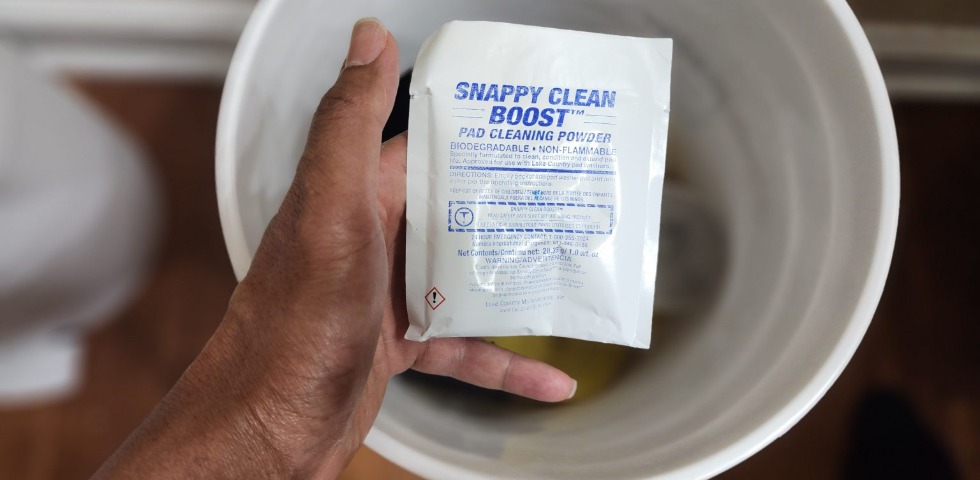
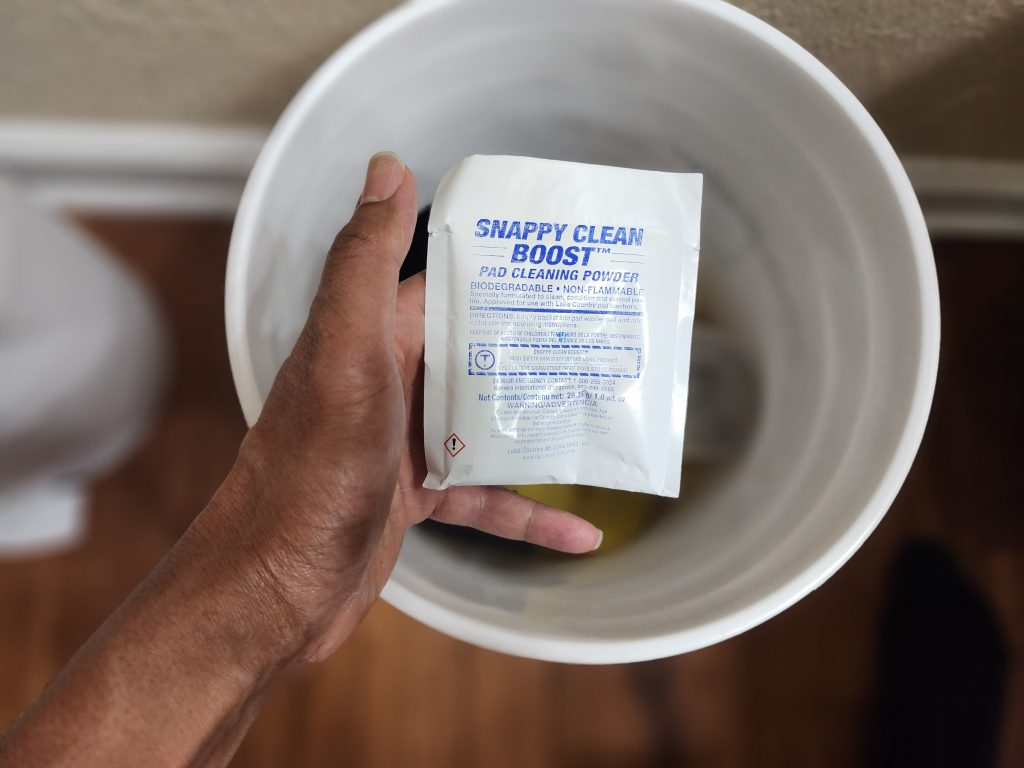

One scoop or packet of Snappy Clean Pad Cleaner, a container of water, and a pad cleaning brush, is my method for cleaning my pads. There are other pad cleaning options that are likely more popular. Some critics of my approach would suggest other more advanced, efficient, and/or simpler solutions. I am comfortable with this method.
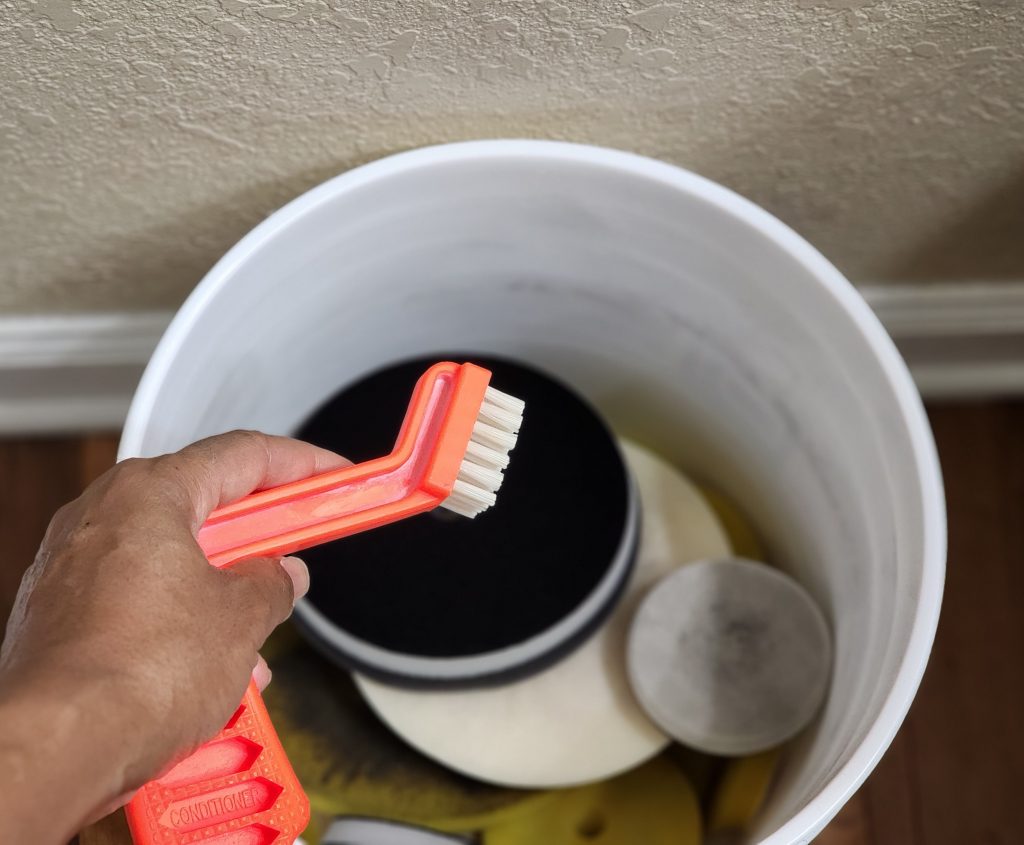

This fulfills two needs. This approach provides a thorough cleaning of my pads combined with minimal deterioration of pads. I believe the latter (pad life cycle and cleaning method) is not discussed enough.
Your popular detailing All-Purpose Cleaner is often considered a more practical alternative. I would not necessarily call it a bad alternative. Like all elements of detailing, there are certain cleaners that are formulated to not be TOO HARSH with respect to preserving the substance it cleans. This is where, especially with cost being minimal, using a product dedicated to pad cleaning is a easy choice. With a little bit of dwell time and medium firm bristle brush, I found a quality formulation that is strong enough to clean my pads.
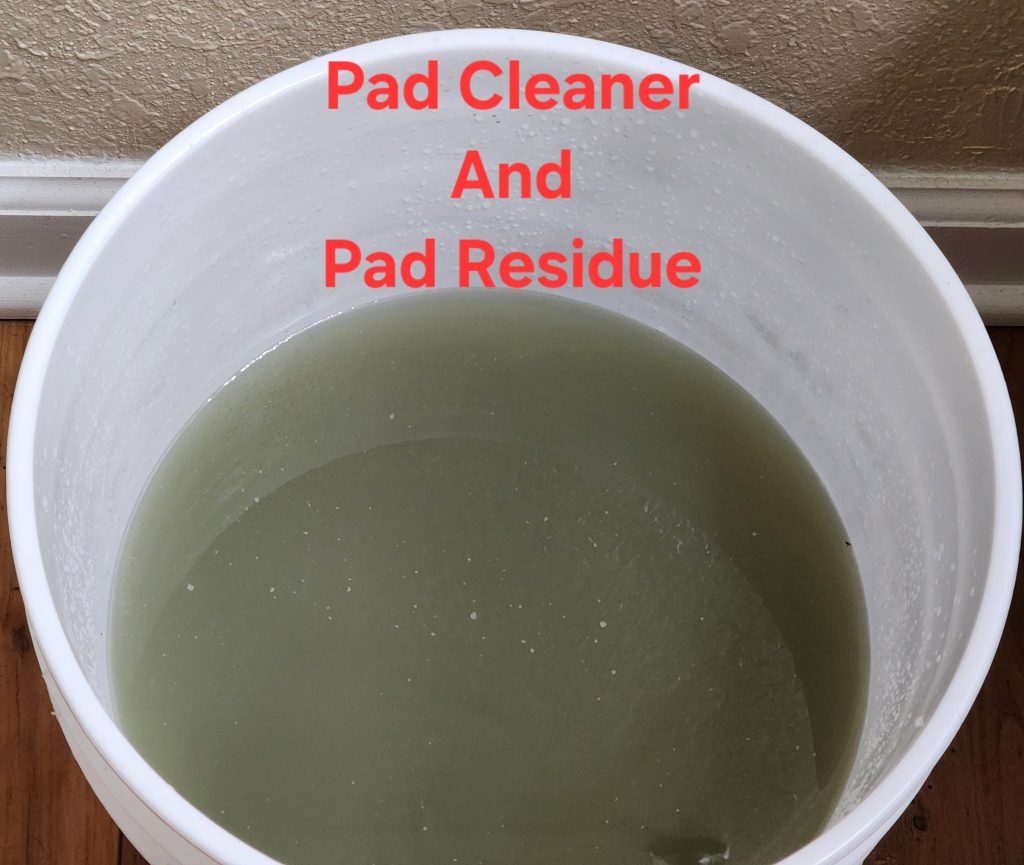
I fill a 3 gallon bucket halfway with water with a packet or recommend amount from the container. I place the pads in the bucket to soak. These pads were in worse condition than usual, due to and unusual set of circumstances polishing a vehicle. They also were left dirty much longer than usual (over a month). Pads are being pre-soaked prior to scrubbing.
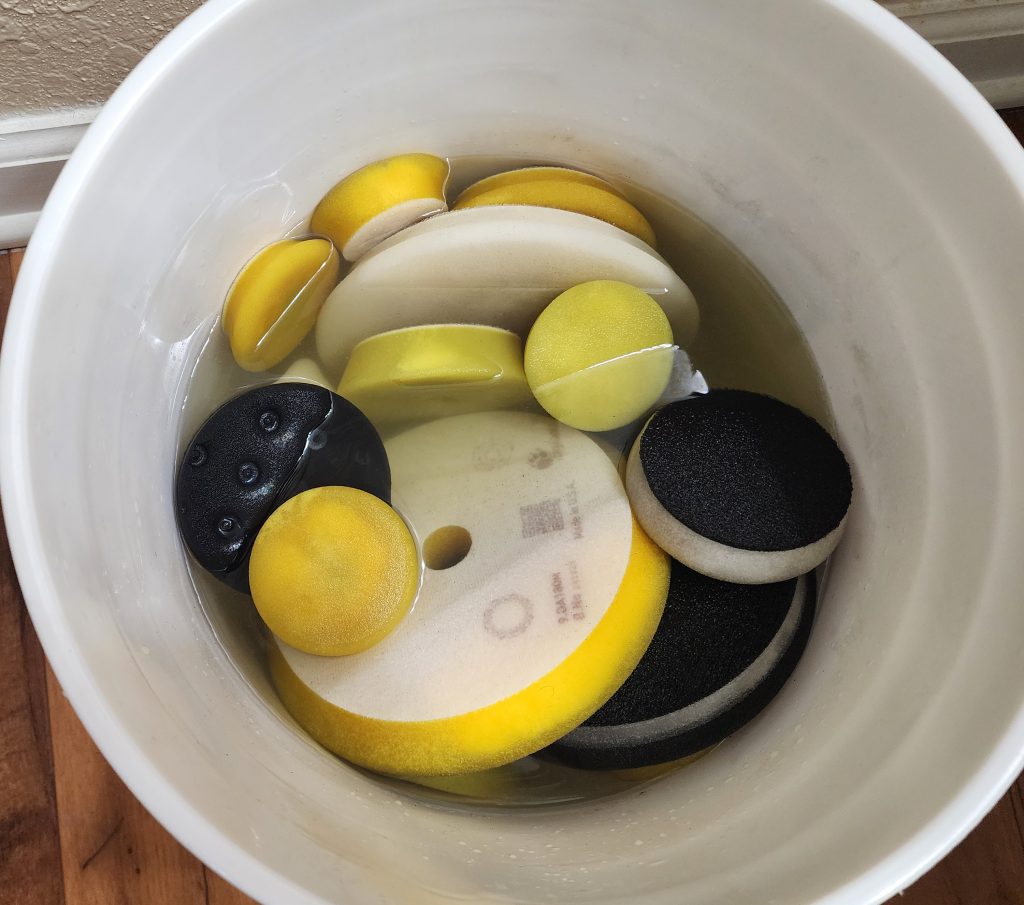

Residue is already being pulled from the pad.
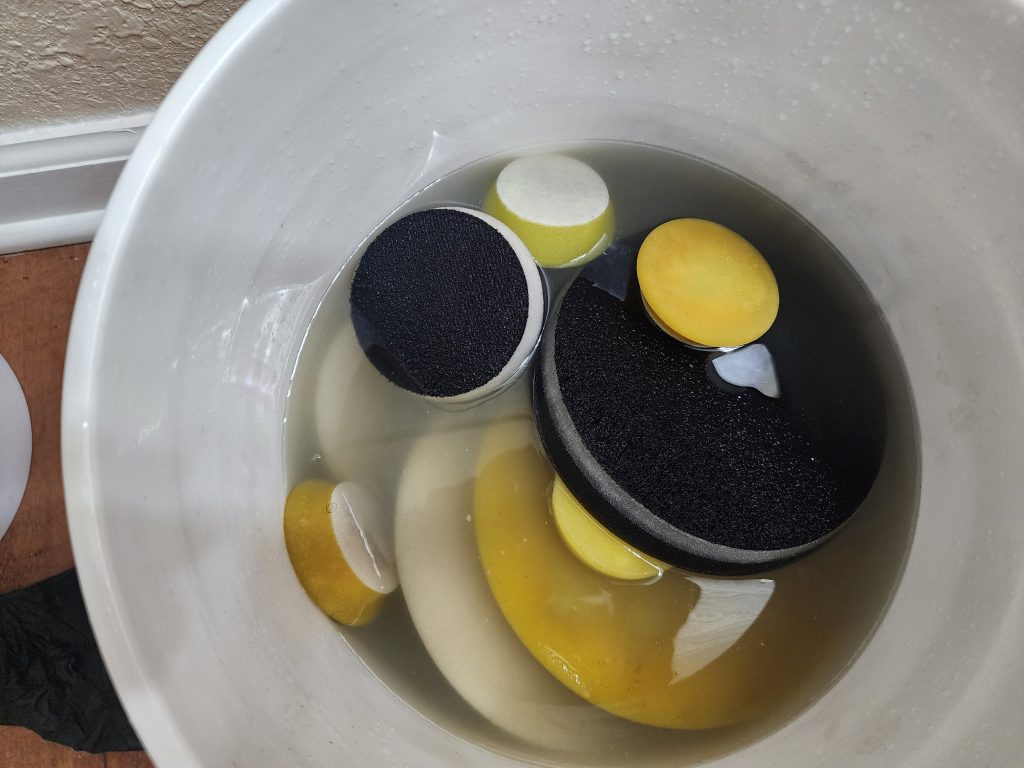
Although I intentionally set the stage for a good test by waiting. I consequentially pre-soaked the pads (longer) for about two hours. My pre-soak is normally anywhere from a few minutes to a couple of hours.
I scrubbed each of the pads twice.
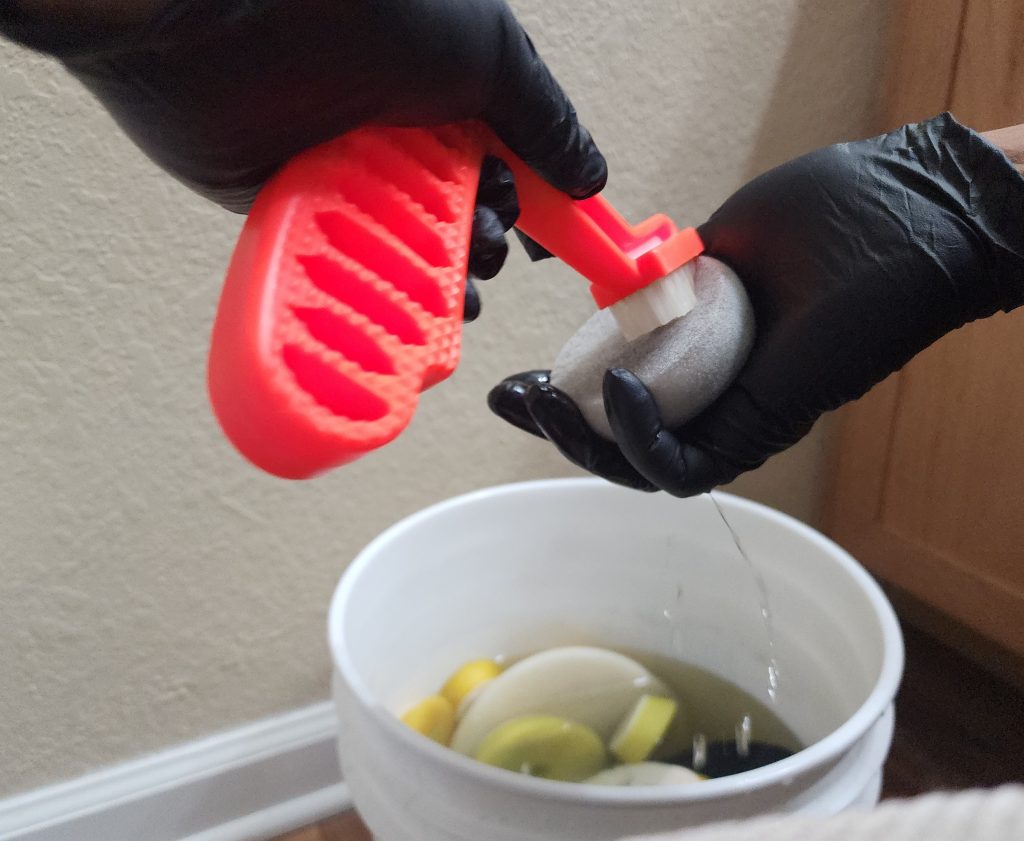

I would later return the pads to the water for another 2 hours. This is longer than my usual time and based upon how they looked this extra dwell time probably was not necessary. I often go to the next step within an hour, usually when cleaning within a week of use.
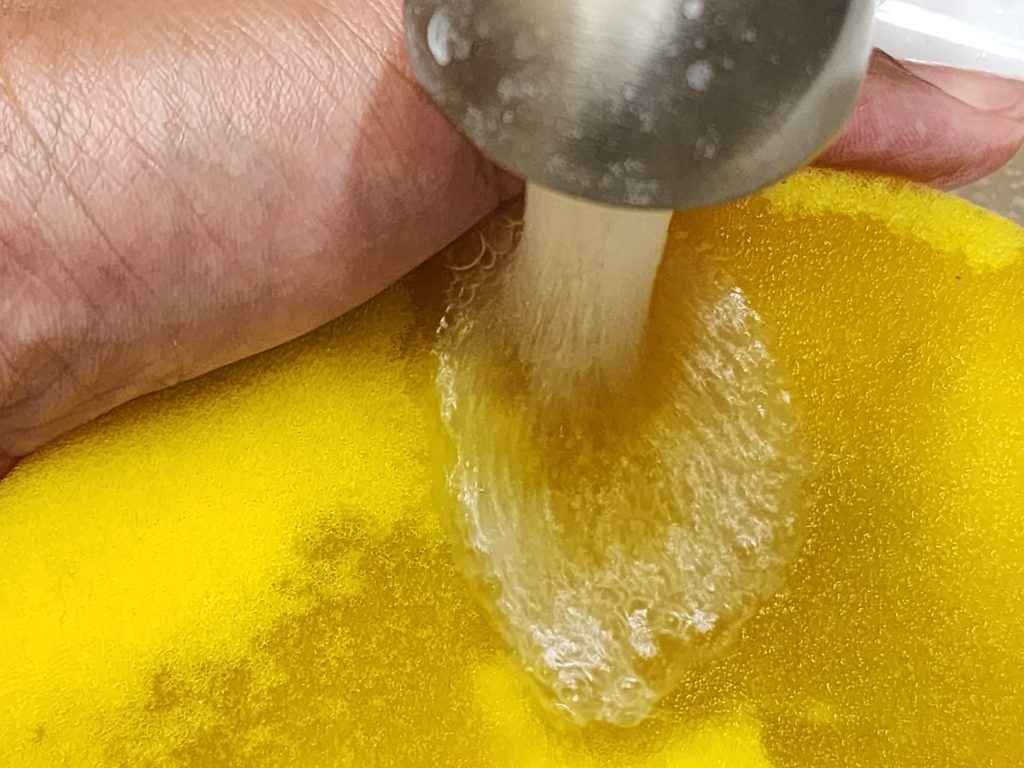
Rinsing and/or soaking in clean water is the next step. I believe rinsing thoroughly is important as the initial scrubbing, to make sure no soap remains.
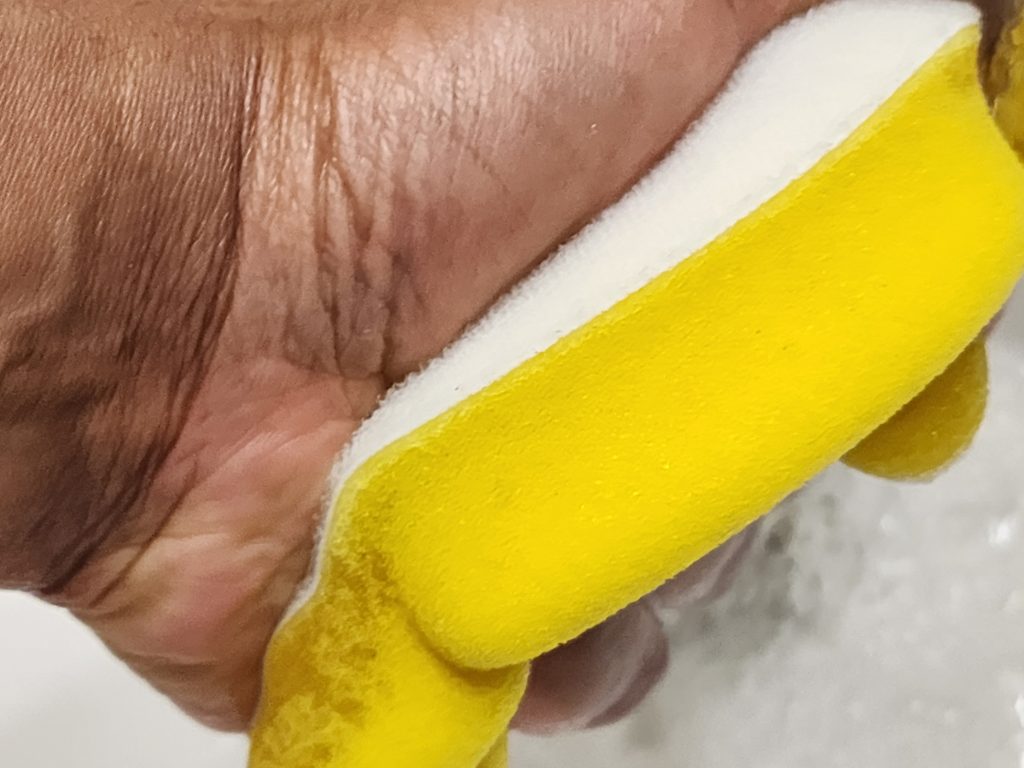
Squeeze the water out of the pads (wringing out). Let your pads sit on a preferred clean area to air dry for 2 to 4 days. Often, especially if in a time crunch, I will take my Porter Cable 7424XP (rotary polishers work well) and spin dry them for a few seconds at a medium speed through the drying stage. This will cut the time in half. Be mindful that water will be sprayed using this technique and excess moisture may compromise the polisher’s backing plate at some point. I prefer to wait about 24 hours for a dryer pad for those reasons.
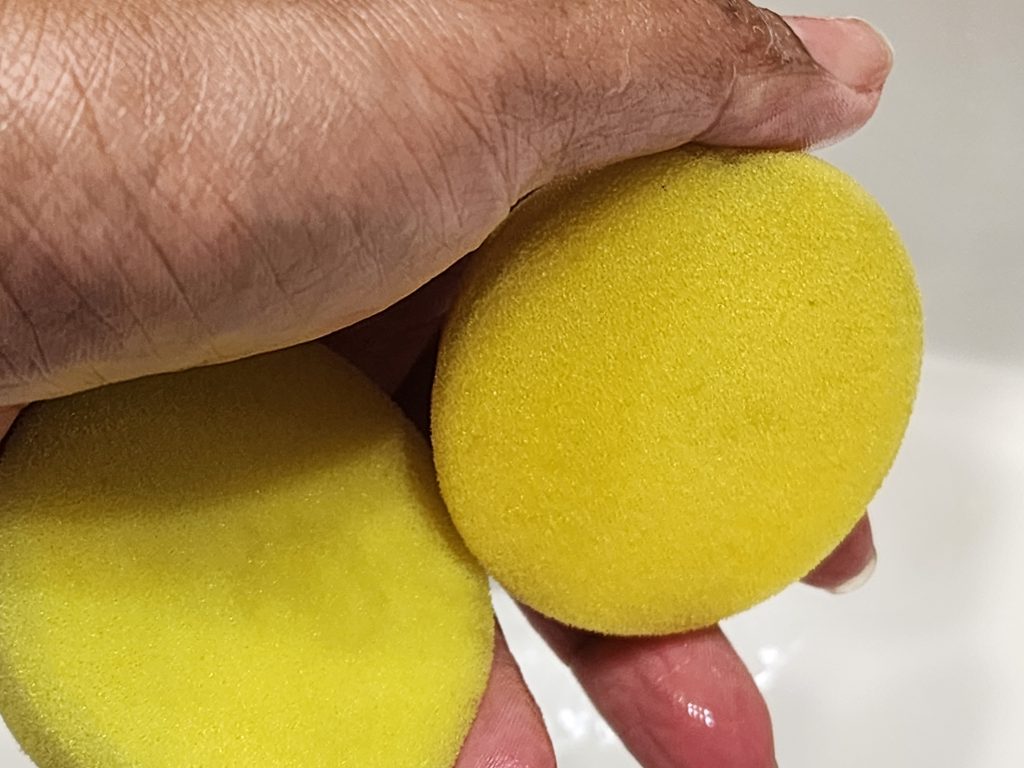
I have noticed relative to others in the detailing industry, a noticeable improvement in longevity with my pads. For transparency it is also important to mention these two or contributing factors. I purchase high quality pads. I also switch my pads frequently, often before they gum up. Though in the recent example my pads were quite saturated with product (unusual situation) and for a long period of time. I am also not shy about throwing away pads that have deteriorated.
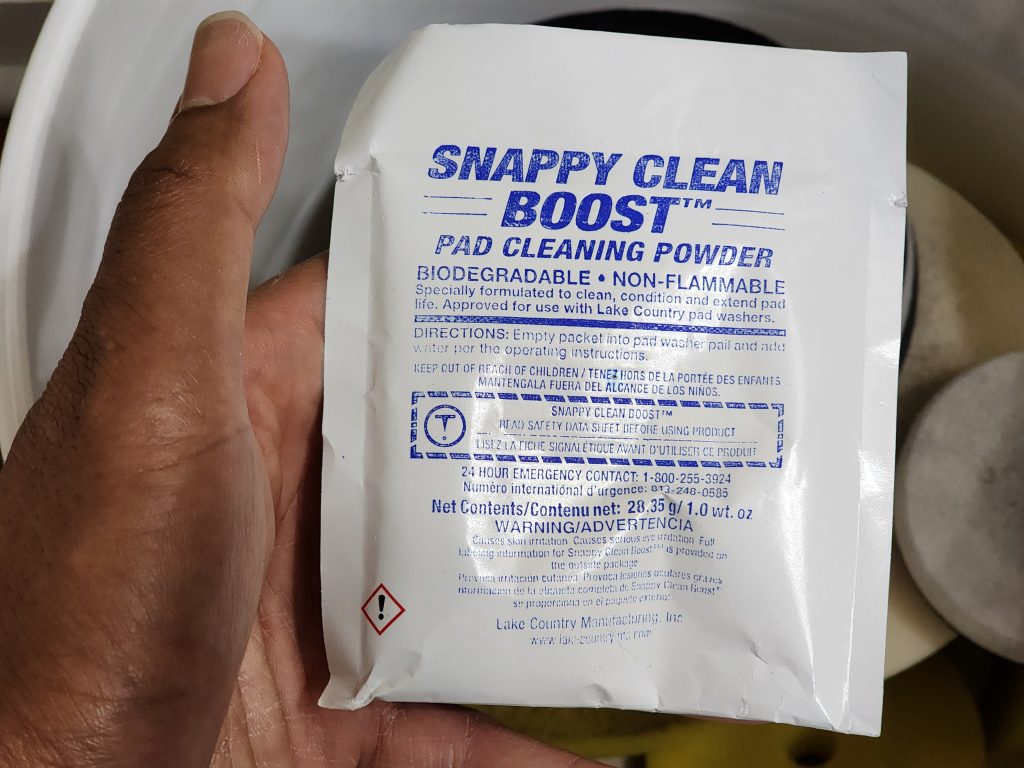
You can purchase the single packets or get the 5 liter option at Detailed Image.