

This article is written by Levi Gates, Director of Liquid Elements North America!
Why another polisher brand … and why now?
I’ve been around detailing long enough to know that the U.S. doesn’t exactly sit around waiting for new brands to show up.
Detailers here are loyal. They’ve built businesses around tools that put food on their table. And honestly, they should be skeptical. I’ve watched brands come in with big promises, loud marketing, and disappear just as fast when real work started.
So when the conversation about bringing Liquid Elements to North America first came up, my reaction wasn’t excitement.
It was hesitation.
Because the last thing this industry needs is another logo on a box.
What changed my mind wasn’t a spec sheet or a sales pitch. It was people.
Years ago, as I started spending more time in Europe teaching, attending shows, and working alongside different brands, I kept hearing the same name come up from detailers who genuinely cared about the craft. Liquid Elements wasn’t trying to dominate the room with hype. They were building tools and products that felt intentional, developed through real-world use instead of marketing trends.
Liquid Elements has been around since the early 2000s, long before most American detailers had heard the name. The brand grew out of a passion for car care in Germany, starting small and evolving alongside a community that valued education and hands-on experience. They didn’t rush into global expansion. They focused on refining what they made, building relationships across Europe, and developing a product line that reflected how detailers actually work. That long-game mindset is something I’ve always respected.
Another piece of the story is Sebastian.
Sebastian Schäfer isn’t just a CEO sitting behind a desk. He’s deeply involved in the direction of the brand, from product development to community building. The first time we really talked about the future of detailing, it wasn’t about sales numbers or market share. It was about education, about supporting detailers at every level, and about building something that could last longer than a single product cycle.
Those conversations felt familiar to me. They reminded me of why I fell in love with this industry in the first place.
The longer you do this job, the more you realize detailing isn’t about chasing the newest machine. It’s about finding tools that help you stay consistent when you’re ten hours into a correction and your shoulders are telling you it’s time to quit.
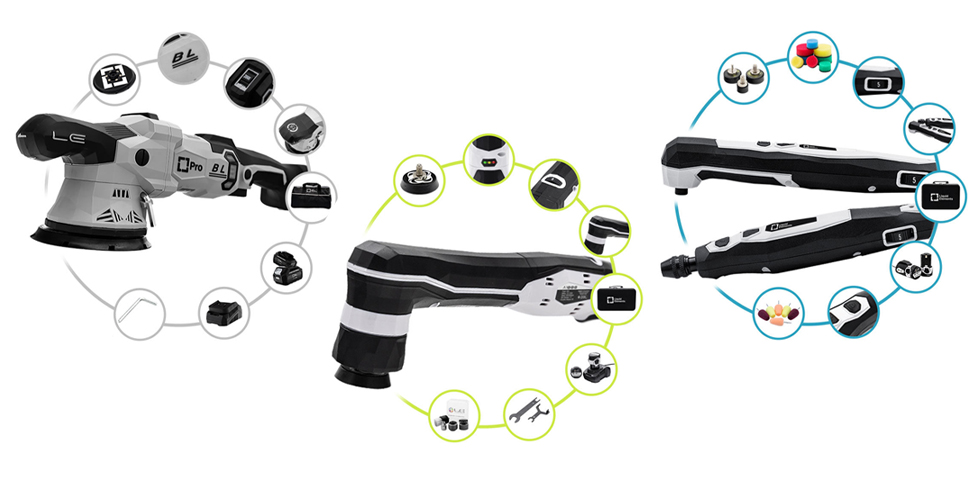
One of the things that stood out to me early on was how strongly Liquid Elements believes in creating their own products. They don’t chase trends by rebadging someone else’s work or jumping on whatever is popular that year. Designing, developing, and standing behind what they build has always been part of their identity. That level of ownership shows up in the feel of the machines and in the confidence the team has when they put something into the market.
When Sebastian and I started talking seriously about bringing the brand to the States, the conversation wasn’t about importing a container of polishers and hoping for the best. It was about building something real. Something that felt familiar to the way I’ve always approached this industry, through relationships first and products second.
That’s how LENA Inc. was born.
And trust me, bringing a European brand into the U.S. isn’t as simple as flipping a switch. Distribution, support, training, logistics … every piece has to be built brick by brick. We’ve spent more time shaking hands, answering questions, and letting people try the machines than we have talking about marketing.
Because here’s the truth: American detailers don’t need another brand telling them what’s “best.” They need tools that earn their place on the cart.
What makes Liquid Elements different isn’t some secret technology or a magic spec number. It’s the feeling you get when you run a machine all day and realize your hands aren’t numb and your shoulders aren’t wrecked. The focus on ergonomics and balance isn’t just marketing language. It shows up in how the machines behave during real work, especially when you’re chasing consistency across panel after panel.
And that’s also why education is such a big part of what we’re building here in North America.
My goal has never been to just ship machines into the market and hope people figure them out on their own. We want to host hands-on training classes, partner with shops and distributors, and create opportunities where detailers can actually pick up the tools, feel the balance, and test them in real situations. Whether it’s local events, trade shows, or small community meetups, the vision is simple: let people experience the machines instead of just reading about them online.
Because once a detailer feels a tool in their hands, everything changes.
Launching Liquid Elements in North America isn’t about replacing anything that’s already here. It’s about adding another option for professionals who care about the process, who want machines that support their workflow instead of fighting it.
Right now, we’re building slowly and intentionally. Meeting distributors face to face. Teaching when we can. Listening more than we talk. Because trust in this industry isn’t built overnight. It’s built through conversations, through shared work, through showing up when people need help.
What excites me most isn’t just seeing Liquid Elements machines in shops across the country. It’s seeing a new wave of detailers realize that tools can be part of a bigger story. Education. Community. Growth.
That’s always been the goal for me.
And if we do this right, Liquid Elements won’t just be another brand entering the U.S. market. It’ll become part of the journey for the next generation of detailers learning what this craft is really about.
Related Posts
- Ethos Car Care – An Introduction
- Introducing Two New Authors, Matt Carter & Nick Whitaker!
- Mobile Tech Expo – Part 3 My Initial Observations Of The New Liquid Elements And Rupes Polishers
- Mobile Tech Expo – Part 1 Speaking And Connecting With The Detailing Industry
- Just in Time for Detailing Season: Completely Refreshed Detailing Guide